Extracorporeal membrane oxygenation (ECMO) is advanced life support that does the work of your heart and lungs when you’re ill. If your lungs can’t provide enough oxygen or your heart cannot pump enough blood, ECMO can help keep the body functioning while giving these organs time to recover.
When medication or a breathing machine aren’t doing enough to treat your serious heart or lung issue, ECMO may be the next step. ECMO is an innovative life support system that temporarily takes over the work of the heart and lungs, allowing your care team to focus on treating the underlying illness. MU Health Care is the only academic health system in central Missouri to offer ECMO as part of our full scope of heart services.
Types of ECMO at MU Health Care
We offer two types of ECMO: venoarterial (VA) and venovenous (VV), depending on whether the heart, lungs or both need support.
VA ECMO
VA ECMO supports both your heart and lung function. The machine transfers blood from a large vein into a large artery, allowing oxygen-rich blood to circulate through your body when your heart is too weak to pump it.
VV ECMO
VV ECMO supports your lung function by putting oxygen into your blood but does not pump blood for your heart. To have VV ECMO, your heart must be healthy enough to pump your blood.
Am I a Candidate for ECMO?
If a serious illness or injury has affected your heart or lung function, you may benefit from ECMO. Our team has expertise in using heart and lung life support for people with:
- Asthma that leads to acute respiratory distress syndrome (ARDS) or respiratory failure
- Blood clot in lung (pulmonary embolism)
- Bruised lung (pulmonary contusion)
- Burns, or inhaling smoke or harmful fumes
- Cardiac arrest
- COVID-19
- Drug overdose
- Flu
- Heart failure
- Heart valve disease
- High blood pressure that affects the lungs and heart (pulmonary hypertension)
- Inability to pump enough blood (cardiogenic shock)
- Inflammation of the heart (myocarditis)
- Irregular heartbeat (arrhythmia)
- Pneumonia
- Severe immune response caused by infections (sepsis)
- Tear in major heart vessel (aortic dissection)
- Traumatic lung injury
Getting ECMO
Your cardiologist, cardiac surgeon, pulmonologist (lung specialist) or other doctor may recommend you for ECMO. Many physicians from outside of MU Health Care refer patients to us for this lifesaving treatment.
Information for Referring Providers
Our Approach to ECMO Care
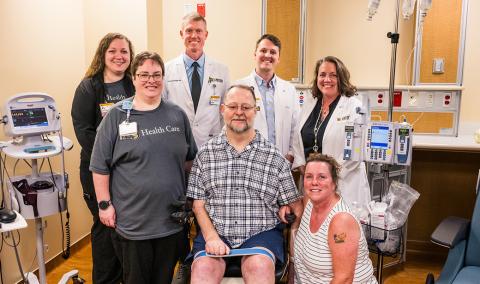
Inside our cardiac intensive care unit (CICU) and operating rooms, we work together to manage your heart or lung failure. Your ECMO care team includes:
- Cardiac intensivists: Specially trained to manage critically ill heart patients.
- Cardiologists: Provide leading-edge heart care.
- Cardiothoracic surgeons: Offer surgical options for heart and lung diseases.
- Pulmonologists: Specialize in treating lung conditions.
- Perfusionists: Trained and certified to administer ECMO.
- ECMO specialists: May be nurses, respiratory therapists or perfusionists with training on ECMO.
- ICU nurses: Care for you in the cardiac ICU.
- Respiratory therapists: Manage breathing machines and other breathing treatments.
Benefits of ECMO
Receiving ECMO at a leading heart and vascular center like MU Health Care has many benefits, including:
- Giving your heart and lungs time to rest and recover
- Acting as a “bridge” to transcatheter aortic valve replacement (TAVR), heart or lung transplant or other surgery
- Supporting the body during critical illness